Reasonable Adjustments
The NHS uses something called the Reasonable Adjustments Digital Flag (RADF) to make sure that people with disabilities or long-term health conditions get the same access to healthcare as everyone else. This supports the Equality Act (2010), which protects your rights.
The flag is a note added to your NHS record. It shows what adjustments (changes or support) you may need to make it easier for you to use NHS services and so NHS staff know how best to support you.
Examples where the Reasonable Adjustments Digital Flag would be useful are:
- Patient lip reads (so communication should either be face-to-face or written).
- Patient is blind (so communication should be verbal or in brail and not written).
- Patient has a speech impairment (so may find written communication easier).
- Patient has dementia (so may need to be reminded of appointments the day before/on the day).
- Patient is disabled & requires wheelchair access
This information will be kept on the NHS Spine (which is a safe and secure NHS computer system) and we will only do this if you agree to give your consent.
Other NHS services that can use the NHS Spine will be able to see your reasonable adjustment needs. These services include A&E, hospitals, ambulance staff, pharmacists, and dentists.
What are the benefits of telling your GP of any reasonable adjustment?
- It reduces stress for you and your carers because you don’t have to explain your needs every time you use healthcare services.
- It helps make healthcare easier for everyone to use.
- Screening services can change how they work so everyone can take part.
- Vision (blindness or partial sight)
- Hearing (deafness or partial hearing)
- Mobility (difficultly walking short distances or climbing stairs)
- Dexterity (difficulty lifting and carrying objects or using a keyboard)
- Learning/understanding/concentrating difficulties.
- Memory impairments (dementia/Alzheimer’s)
- Mental health (anxiety/agoraphobia)
- Respiratory impairments
- Fatigue (e.g., chronic MS)
- Social or behavioural impairments (Aspergers or ADHD)
Accessible Information
We want to communicate with our patients in the best way possible. If you find it hard to read our letters or if you need some communication support for your appointments, please let us know. We can provide information in a number of formats.
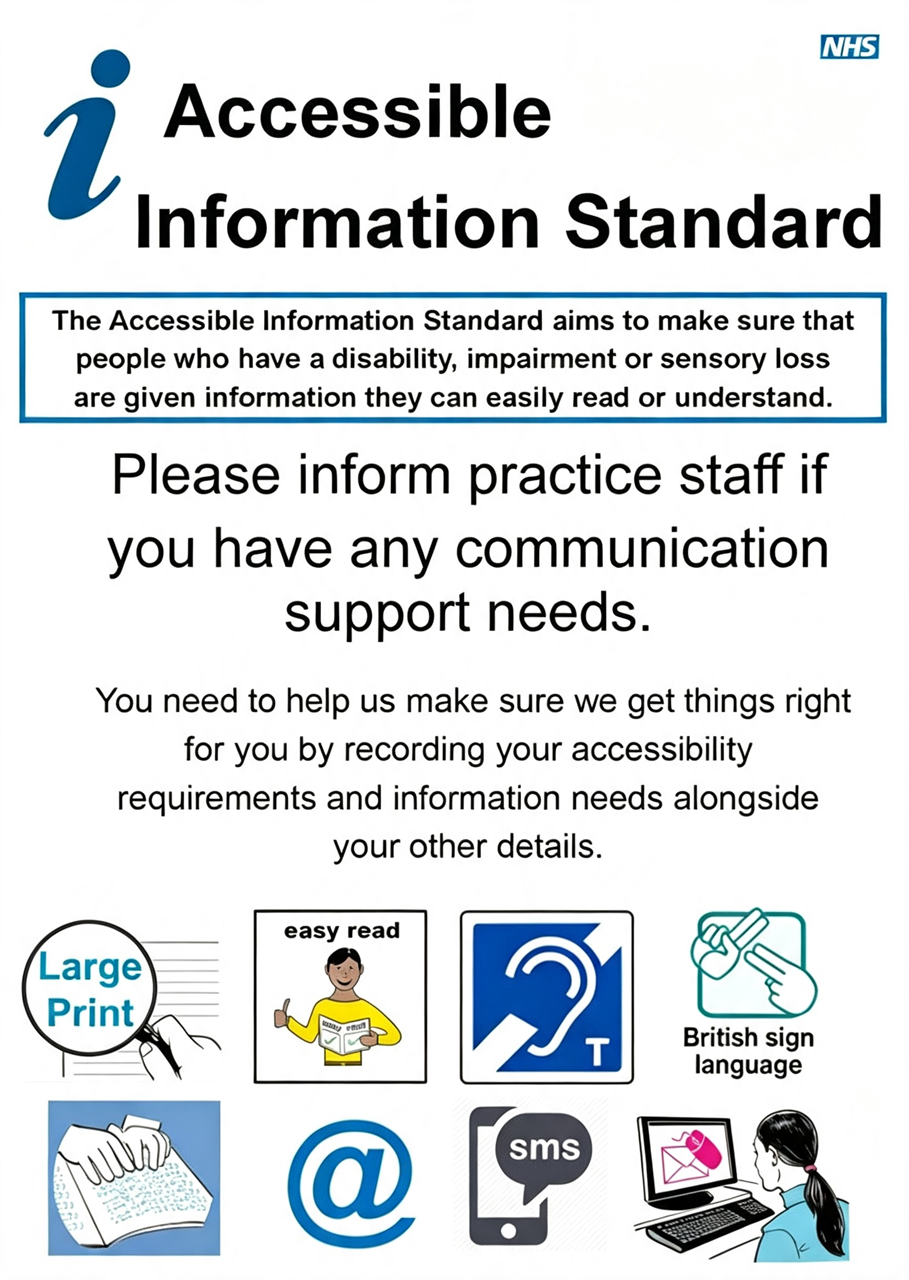
The Accessible Information Standard aims to make sure that people who have a disability, impairment or sensory loss are given information they can easily read or understand.
Please inform practice staff if you have any communication support needs.
You need to help us make sure we get things right for you by recording your accessibility requirements and information needs alongside your other details.
Then there are icons for:
- Large print
- Easy read
- Hearing loop
- British sign language
- Braille
- Text message
- Ask people if they have any information or communication needs and find out how to meet their needs.
- Record those needs clearly and in a set way.
- Highlight or flag the person’s file or notes so it is clear that they have information or communication needs and how to meet those needs.
- Share people’s information and communication needs with other providers of NHS and adult social care, when they have consent or permission to do so.
- Take steps to ensure that people receive information which they can access and understand, and receive communication support if they need it
Helpful resources
- Top 10 reasonable adjustments you can ask for
- New ways your pharmacist can help you
- NHS App
- Getting ready for a blood test
- How to add extra information to your summary care record
- NHS GP Access Campaign 2026 - easy read leaflet now available
- More information on the NHS England Accessible Information Standard
- Birmingham Womens and Childrens NHS Foundation Trust
Please visit for more easy ready leaflets
If you would like to tell us information about how we can make reasonable adjustments for you please complete our Reasonable Adjustments Questionnaire
Page created: 27 August 2026